

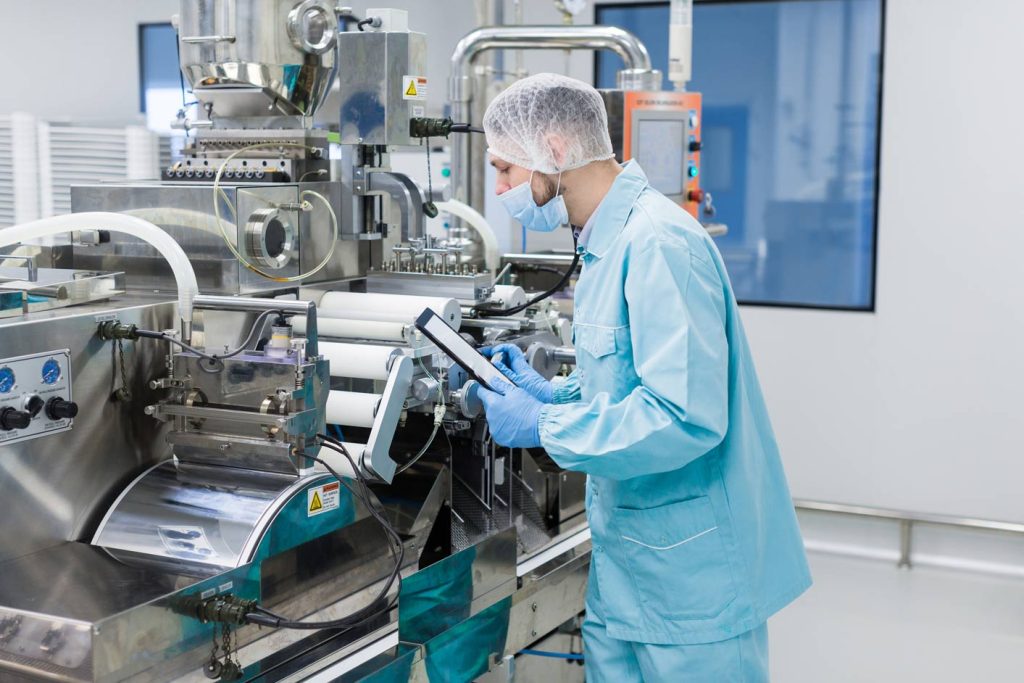
The story of modern healthcare is, in many ways, a story of delegation and specialisation, and nowhere is this more evident than in the rise of medical contract manufacturing as an essential intermediary between innovation and implementation. Like the body’s own division of labour, where organs perform distinct yet integrated functions, the medical device industry has evolved to recognise that designing a life-saving device and manufacturing it at scale require fundamentally different expertise.
The Anatomy of a Manufacturing Partnership
Consider the inventor hunched over a workbench, perfecting a device that might one day restore movement to paralysed limbs or detect cancer at its earliest whisper. This inventor possesses intimate knowledge of clinical need, biomechanics, and material science. Yet translating that prototype into thousands of identical, sterile, regulatory-compliant devices demands an entirely different mastery. Medical contract manufacturing emerged to bridge this gap, much as the circulatory system bridges the distance between lungs and tissues.
The relationship begins with a kind of diagnostic process. The device developer arrives with designs, specifications, and ambitions. The manufacturing partner must assess feasibility, identify potential complications, and prescribe solutions. This initial consultation resembles a clinical encounter, where listening matters as much as technical knowledge.
“We see ourselves as translators,” explains a project manager at a Singapore medical contract manufacturing facility. “Our clients speak the language of clinical outcomes. We must translate that into the language of process controls, quality metrics, and production schedules.”
The Infrastructure of Precision
Walk into a medical contract manufacturing facility and you enter a world calibrated to tolerances that would impress a neurosurgeon. Cleanrooms maintain particle counts lower than operating theatres. Temperature and humidity fluctuate within fractions of a degree. Every surface, every tool, every material undergoes scrutiny that borders on obsessive.
This precision reflects necessity rather than perfectionism. A contaminated implant can trigger sepsis. A dimensional deviation in a catheter might perforate a vessel. Medical devices operate within the unforgiving environment of the human body, where mistakes measure in morbidity and mortality.
The infrastructure supporting medical contract manufacturing includes:
- Validated cleanroom environments ranging from ISO Class 7 for device assembly to ISO Class 5 for sterile filling operations, each monitored continuously for particle counts and microbial contamination
- Automated inspection systems using machine vision to detect defects invisible to human observers, much as radiological imaging reveals pathologies beneath the skin
- Environmental monitoring programs that track temperature, humidity, and air pressure differentials, maintaining conditions as stable as the body seeks homeostasis
- Sterilisation capabilities employing ethylene oxide, gamma radiation, or steam autoclaves, each method suited to different materials and device configurations
- Traceability systems that document every component’s journey from raw material to finished device, creating a genealogy as detailed as a patient’s medical history
Speed as Clinical Imperative
Time in medicine carries weight beyond mere inconvenience. Delayed diagnosis allows cancer to metastasise. Postponed surgery permits conditions to deteriorate. Similarly, delays in bringing medical devices to market translate directly into human suffering. Medical contract manufacturing addresses this urgency through systems designed for efficiency without compromising safety.
The acceleration begins with existing infrastructure. A company building manufacturing capacity from scratch faces a timeline measured in years. Facilities require design and construction. Equipment needs installation and validation. Personnel require training and qualification. Each step consumes months. Medical contract manufacturing partnerships compress this timeline dramatically by providing immediate access to established capabilities.
Yet speed never supersedes safety. The manufacturing process incorporates multiple verification points, each a checkpoint ensuring quality before progression. In-process inspections catch deviations before they propagate. Statistical process control identifies drift before it produces defects. Final release testing confirms every device meets specifications.
The Singapore Standard
Singapore’s emergence as a hub for medical contract manufacturing reflects deliberate cultivation of conditions favouring precision industry. The nation’s regulatory framework aligns with international standards, facilitating market access across jurisdictions. Educational systems produce graduates versed in quality management and manufacturing sciences. Infrastructure supports sophisticated operations without the constraints common in developing regions.
“Clients specify Singapore manufacturing after evaluating risk holistically,” notes a quality director. “They weigh not just costs but consistency, intellectual property protection, and regulatory alignment. The calculation favours quality.”
The geographic positioning offers practical advantages. Asian supply chains provide component access. International connectivity enables collaboration across time zones. Political stability creates security for long-term partnerships.
Process Diversity and Material Science
Modern medical devices span extraordinary material and functional diversity. Polymer catheters navigate vasculature. Titanium implants integrate with bone. Electronic sensors monitor physiological parameters. Medical contract manufacturing facilities develop expertise across this spectrum, accumulating process knowledge that individual device companies rarely justify.
Injection moulding produces polymer components with dimensional precision. Metal injection moulding creates complex stainless steel or titanium parts for surgical instruments. Cleanroom assembly integrates multiple components whilst maintaining sterility. Surface treatments modify materials to enhance biocompatibility or add antimicrobial properties.
Regulatory Navigation
The regulatory landscape governing medical devices resembles a complex pharmacology, where multiple agents interact in ways both predictable and surprising. FDA requirements under 21 CFR Part 820 mandate quality system regulations. ISO 13485 establishes international standards. European Medical Device Regulation adds layers of technical documentation and clinical evaluation.
Medical contract manufacturing partners maintain expertise in these requirements as core competency. They guide device developers through design controls and risk management. They prepare technical files and respond to regulatory queries. They maintain registration and compliance across jurisdictions.
The Human Element
Behind the sterile environments and automated systems, medical contract manufacturing ultimately depends on human judgement. Technicians interpret process data. Engineers troubleshoot unexpected variations. Quality specialists decide when deviations warrant investigation. This human element resembles clinical practice, where protocols guide but cannot replace expertise.
For medical device innovators navigating the journey from concept to commercialisation, partnerships with experienced medical contract manufacturing facilities provide the infrastructure, expertise, and regulatory knowledge that transform prototypes into therapies reaching patients who need them.
